Commercial Floor Sanding in Catford SE6
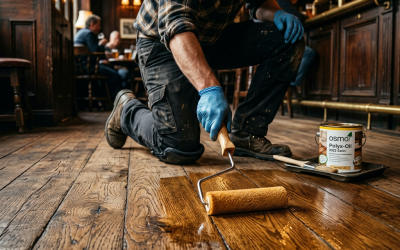
Some premises need a complete strip-back; others benefit from Commercial Floor maintenance in Catford or carefully specified Commercial Floor Polishing in Catford. The right treatment depends on the existing coating, wear depth, timber thickness and expected traffic. We would sooner establish those facts at the outset than sell a quick polish that fails after a few weeks of commercial use.
Commercial Timber Floors Across Catford: Different Buildings, Different Demands
Catford has a mixture of Victorian shopping parades, converted houses, older institutional properties and more modern commercial units. A suspended pitch-pine floor in an Edwardian building needs a different approach from oak parquet in an office refurbishment or a modern engineered floor inside a retail unit. The finish must suit the timber as well as the way the premises operates.
Around Catford Broadway, Bromley Road and Rushey Green, shopfront thresholds and entrance areas take the worst punishment from grit and wet shoes. Older buildings around Canadian Avenue and the Culverley Green Conservation Area can also contain original boards, altered joists and previous repairs that deserve closer inspection before machinery is brought in.
Offices, Coworking Spaces and Serviced Offices
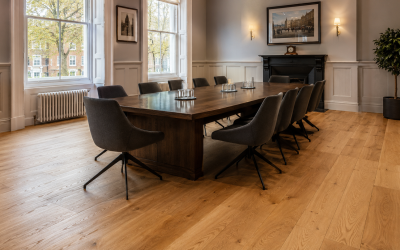
Office floors commonly suffer from castor-chair wear, desk movement, concentrated foot traffic and cleaning residues. We assess whether the floor needs full sanding or whether a compatible maintenance coating can restore protection without removing unnecessary timber. Meeting rooms, corridors and reception areas can be programmed separately to keep parts of the premises usable.
Shops, Boutiques, Showrooms and Shopping-Centre Units
Retail floors are marked by stock trolleys, display stands, entrance grit and repeated cleaning. Particular attention goes to doorway transitions, old fixture holes and the paths customers actually use. Out-of-hours working may be appropriate where deliveries, public access or centre management rules restrict daytime activity.
Restaurants, Cafés, Pubs and Takeaway Premises
Hospitality floors face moisture, grease, food spillages, chair abrasion and repeated wet mopping. The coating needs to tolerate the agreed cleaning regime, while wet slip resistance must be assessed where contamination is foreseeable. Kitchen working areas may require a specialist non-timber flooring system rather than ordinary timber lacquer.
Factories, Workshops and Manufacturing Units
Timber floors in older workshops can have deep oil contamination, impact damage and movement around machinery bases. We check whether the timber is structurally suitable for restoration before specifying abrasives or coatings. Where forklifts, heavy point loads or chemical exposure are involved, the floor’s intended use must be checked against the manufacturer’s system limitations.
Storage Units, Distribution Centres and Delivery Depots
Storage and dispatch premises create concentrated wear at loading routes, shelving positions and packing stations. Loose boards, raised edges and damaged transitions need correction before finishing. Heavily loaded industrial traffic may call for a different floor specification rather than a decorative timber finish.
Gyms, Cinemas, Event Venues and Studios
Studios and event spaces need coatings suited to repetitive movement, furniture shifting and frequent cleaning. For activity areas, the intended use matters more than appearance alone: dancing, exercise and sports floors can require specific friction, resilience and coating characteristics. We would not substitute a general-purpose anti-slip coating for a properly specified sports-floor system.
Hotels, Hostels and Serviced Accommodation
Guest corridors, reception floors and communal lounges cannot always be taken out of service together. Sectional sanding and controlled re-entry help limit disruption, while careful masking protects fitted joinery, skirting and neighbouring rooms. Noise restrictions and guest circulation routes must be agreed in advance.
Clinics, Dental Practices and Treatment Rooms
Clinical premises require particular care with dust containment, odours and cleaning compatibility. Product selection should be checked against the facility’s infection-prevention procedures and disinfectant regime. Some clinical treatment spaces require impervious, coved flooring and should not be specified for exposed timber simply because a lacquer is described as hygienic.
Schools, Colleges, Universities, Academies and Places of Worship
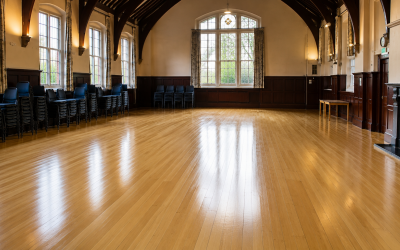
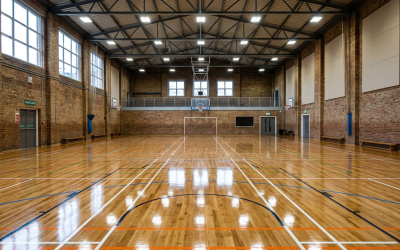
School halls, classrooms, churches, mosques and temples often have large areas of traditional timber that have been coated repeatedly over the years. We consider assembly use, footwear, cleaning practices, heritage details and booked activities when planning the work. Holiday and weekend programmes are often more practical than closing a frequently used building during the working week.
Why Commercial Timber Floors Fail — And Why Domestic Methods Are Not Enough
A domestic floor might cope with occasional furniture movement and ordinary household footfall. A commercial floor faces hundreds of repeated movements across the same routes, abrasive grit, cleaning machinery and products that may not be compatible with the original seal. That combination can wear through a coating long before the surrounding timber looks particularly old.
Off-the-shelf polish can make matters worse when applied over grease, silicone-based maintenance products or an incompatible lacquer. It may leave a slippery film, produce patchy adhesion or prevent a new coating bonding correctly. Adding shine is not the same as restoring a protective wear layer.
Common Structural and Safety Problems
- Open board joints: gaps trap grit, food debris and moisture, making routine cleaning more difficult.
- Loose parquet: failed adhesive allows blocks to rock, lift or break under repeated traffic.
- Worn thresholds: raised board edges and uneven transitions create potential trip hazards.
- Lost slip resistance: unsuitable finishes, grease or cleaning residues can increase slipping risk, particularly when wet.
- Moisture ingress: failed seals around entrances, wash areas and plumbing routes can cause swelling, staining and adhesive failure.
- Over-sanded timber: old boards may have insufficient remaining thickness for another aggressive sanding programme.
- Coating contamination: wax, silicone, oil or poorly removed detergents can cause fisheyes, peeling and failed adhesion.
Before quoting for a complete restoration, we need to establish whether the defects are in the surface coating, the timber itself or the supporting structure. Sanding will not correct a damp subfloor, rotten joists or permanently moving parquet. Those problems must be dealt with first.
Our Commercial Floor Sanding and Restoration Process in Catford SE6
Step 1: Subfloor Audit, Timber Identification and Moisture Testing
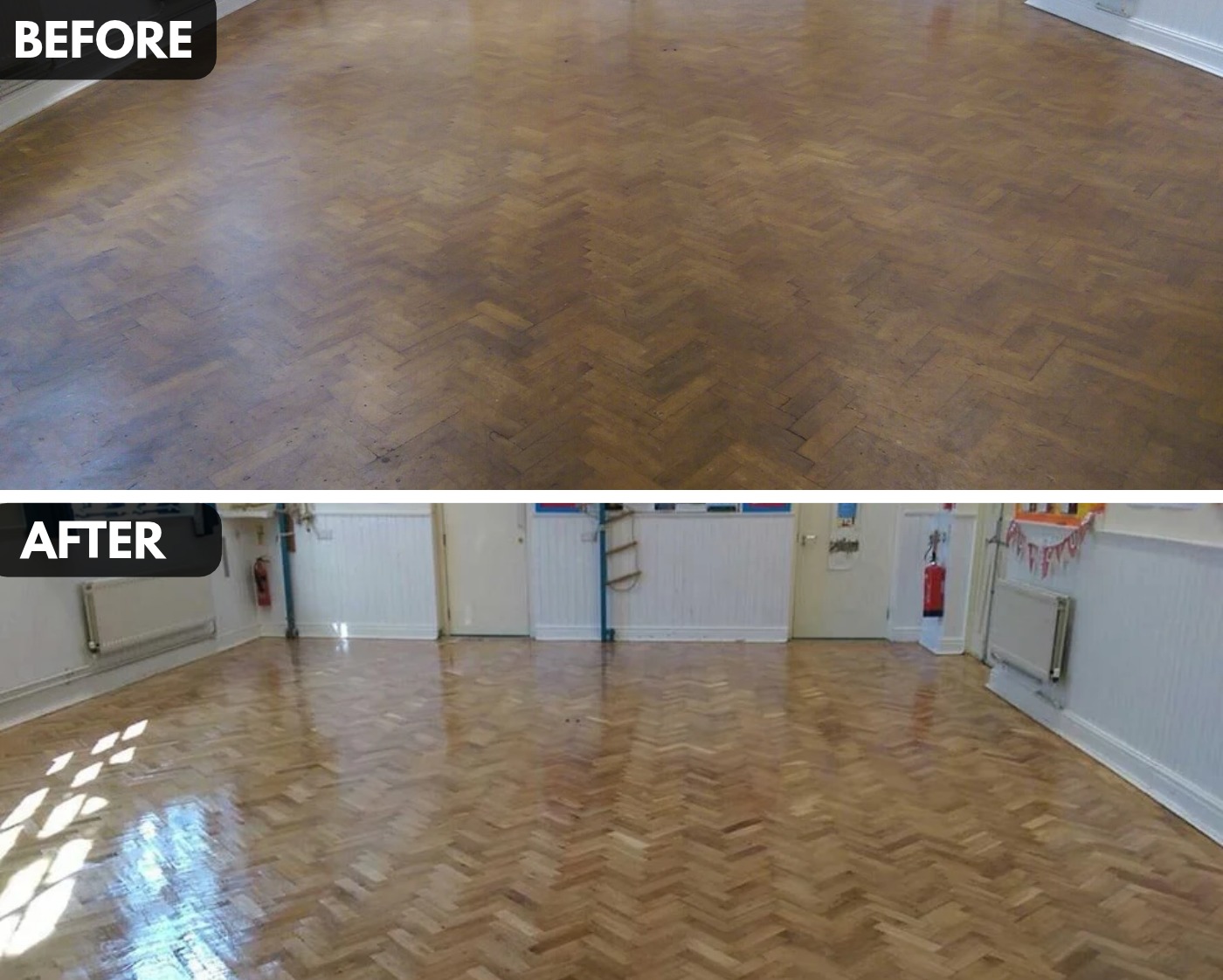
We start by inspecting the floor’s construction, coating history, traffic patterns and obvious damage. In older Catford properties, that can mean distinguishing quartersawn oak parquet from pitch-pine boards, teak flooring or later softwood repairs. Grain, end-grain characteristics, board dimensions and previous coatings all influence the sanding method.
We check for loose fixings, hollow-sounding blocks, excessive deflection and signs of moisture. Timber readings may be taken with calibrated moisture meters, while suitable subfloor hygrometer checks are used where a concrete or screeded substrate is involved. A high moisture result needs investigation before adhesive or lacquer is applied.
We also review previous contamination and potential hazardous coatings or adhesives. Suspect asbestos-containing flooring materials or old bituminous residues must not simply be ground away; further identification and specialist procedures may be necessary before work proceeds.
Step 2: Timber Repairs, Re-Bonding and Resin Gap-Filling
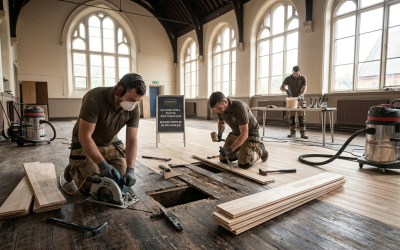
There is little point putting an expensive coating over a floor that still moves. Loose parquet blocks are lifted where necessary, the defective adhesive is assessed and the substrate prepared before re-bonding. A suitable silane-based flexible parquet adhesive can accommodate normal timber movement while providing a firm bond, subject to the product specification and substrate condition. For fine, stable joints, resin-slurry gap filling using compatible sanding dust can give a neat, even finish. Wider gaps in old pitch-pine boards may call for timber slivers instead; filling every moving joint with rigid resin is a common cause of cracked filler. Split boards, damaged block edges and proud nail heads are repaired before the main sanding stages.
Where low-emission products are needed, we can specify suitable materials carrying an EMICODE EC1 Plus rating, subject to product availability and compatibility. This is a verified emissions classification for qualifying products, not a blanket claim that every adhesive is odour-free or suitable for immediate occupation.
Step 3: HEPA Dust-Controlled Sanding and Surface Preparation
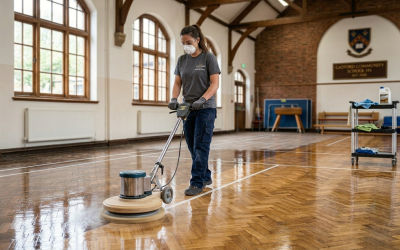
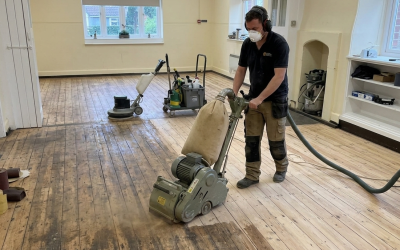
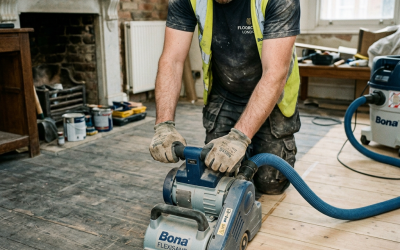
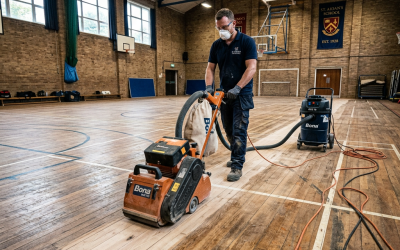
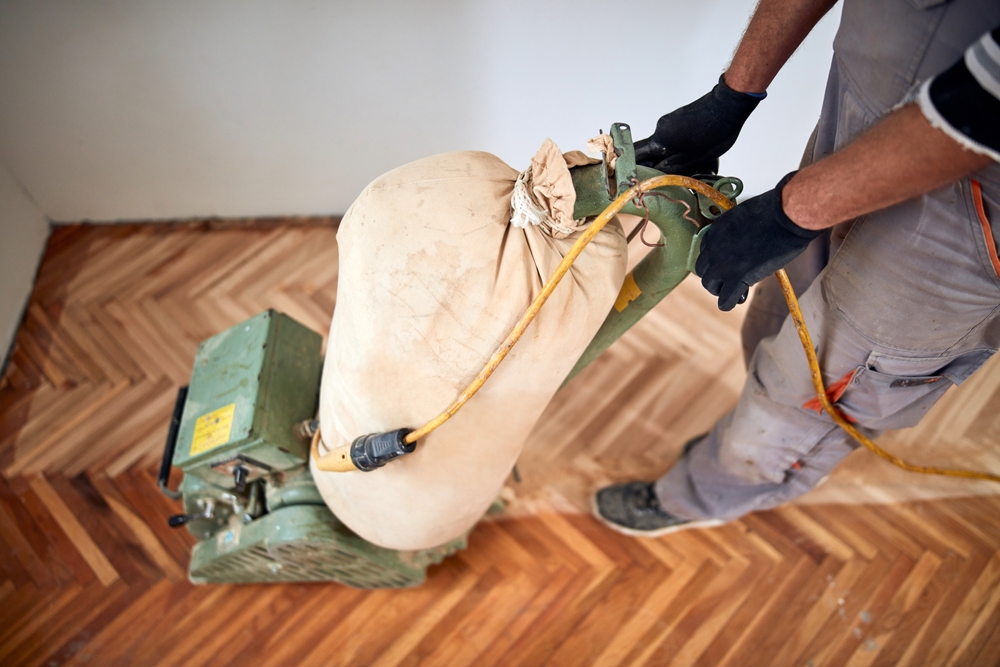
On a sizeable solid-timber floor, a Lägler Hummel belt sander is an appropriate type of professional machine for controlled stock removal and levelling. Edges, corners, door frames and fixed joinery need smaller equipment and hand finishing. The abrasive sequence is selected from the floor’s condition rather than using the same grit combination on every job.
Typically, coarse cutting removes the failed finish and necessary surface defects, followed by intermediate and finer abrasives to remove sanding marks. We take particular care around old parquet patterns and previously sanded boards, where removing too much material can expose tongues, fixings or thin wear layers. Engineered timber must be checked for adequate remaining wear-layer thickness before any full sanding.
For occupied commercial sites, sanding equipment should be paired with effective dust extraction and suitable task controls. HEPA H14-filtered extraction may form part of the dust-control arrangement, alongside isolation sheeting, tool-mounted capture and appropriate respiratory protection. HEPA filtration does not make a work area automatically dust-free or safe for unrestricted public access.
Step 4: High-Traffic Finishes — 2K Lacquers, Hardwax Oils and Anti-Slip Systems
The protective coating is chosen according to expected wear, cleaning chemicals, visual requirements and slip risk. For busy offices, shops and circulation areas, a commercial-grade two-component (2K) waterborne polyurethane lacquer is often a strong option. Its cross-linking catalyst reacts with the resin system to produce a more chemically resistant film than many standard single-component domestic coatings. The correct mixing ratio, pot life, spread rate, intercoat interval and room conditions are essential. Adding extra catalyst does not make a better lacquer, and applying coats too heavily can slow drying or cause coating defects. We follow the selected manufacturer’s technical data sheet rather than treating every 2K system as interchangeable.
Hardwax oils may be considered for certain traditional floors, specialist interiors and premises where localised maintenance is desirable. They generally need more frequent attention than a suitable heavy-duty lacquer in busy, wet-cleaned commercial areas. The decision depends on how the floor will actually be used. Where slipping is a concern, we consider compatible textured or anti-slip coating systems and the likely wet and dry conditions. Pendulum slip-resistance assessment under BS 7976-2, with current BS EN 16165 methods and relevant UK Slip Resistance Group guidance considered, can inform the specification. A coating described as anti-slip is not proof of a satisfactory installed result.
Step 5: Aftercare and Commercial Floor Maintenance
Once the final coat is applied, the floor needs time to dry and cure. Some commercial waterborne systems permit cautious light foot traffic after approximately 12–24 hours under suitable conditions, but full chemical and mechanical resistance can take several days or longer. Actual reopening times must follow the selected coating’s technical data sheet and the site’s temperature, humidity and ventilation conditions.
We recommend holding back heavy furniture, rolling loads, wet cleaning and protective mats until the appropriate curing stages have been reached. Early use is one of the easiest ways to mark a newly finished floor, particularly when desk chairs or loaded display units are pushed across it.
Routine care should include effective entrance matting, regular dry grit removal, compatible pH-appropriate cleaners and scheduled checks on high-wear areas. Avoid steam mops, excessive water and unapproved polishing products. Planned maintenance coats can be considerably less disruptive than allowing the seal to wear through to bare timber.
Out-of-Hours Commercial Floor Sanding: Keeping Your Catford Premises Operational
With commercial work, the programme matters as much as the finish. A retailer cannot have stock deliveries blocked, a dental practice cannot have sanding dust reaching treatment rooms, and a school cannot reopen a hall while the coating is still curing. We plan the floor areas, access arrangements, noisy stages and handover sequence before agreeing a start date.
Night work and weekend phasing can reduce interference with customers and staff, but they do not remove drying or curing requirements. Building security, fire exits, ventilation, neighbour noise restrictions and any landlord or managing-agent permissions must also be considered. We establish these constraints before committing to a programme.
| Working Shift | Operational Benefits | Suitable Facilities |
|---|---|---|
| Overnight Working | Reduces interference with trading hours, reception activity and customer movement. Requires a suitable noise, security and curing plan. | Retail shops, offices, cafés, restaurants, boutiques and showrooms. |
| Weekend Phased Working | Provides a longer uninterrupted work window, with time for repairs, coating and initial drying before normal weekday use. | Schools, clinics, dental practices, colleges, offices and community premises. |
| Sectional Working | Separates the site into controlled work zones, allowing agreed unaffected areas to remain in use. | Hotels, serviced offices, warehouses, gyms, studios and larger public buildings. |
Commercial Site Access and Health & Safety
A workable method statement needs more than a proposed sanding date. Site-specific RAMS (Risk Assessments and Method Statements) should cover machinery, electrical supplies, pedestrian segregation, dust, noise, manual handling, ventilation, fire arrangements and emergency access. COSHH assessments are required for relevant hazardous substances, including coating components, cleaning agents and any applicable dust exposure controls.
Where required by the site, CSCS-carded operatives, induction records and appropriate commercial liability insurance documentation should be confirmed before mobilisation. Safety data sheets and product technical data sheets should be available for the materials being used. On a shared building, we also need agreement about lift access, waste routes, storage and how other occupants are kept clear of the work zone.
Commercial Floor Sanding Prices in Catford SE6
Commercial floor sanding is normally assessed by area, floor condition, repair requirements, coating specification and access arrangements. A clear, open-plan room with sound timber is very different from a restaurant with fixed seating, loose parquet and years of grease contamination. Overnight working, multiple visits or restricted loading access may also affect the labour allowance.
Our published floor sanding prices provide a useful starting point, including sanding-only and various sealing options. Commercial quotations are confirmed against the actual floor, required finish, preparation work and operating constraints. A published starting rate should not be mistaken for a fixed price for every occupied business property.
For an initial assessment, photographs of the floor, approximate dimensions and a description of the daily traffic are useful. A physical survey is particularly important where timber movement, moisture, contamination or a specialist coating specification is involved.
Practical Advice, Proper Site Surveys and Clear Commercial Quotations
We believe the sensible starting point is to establish what can be restored and what cannot. If the timber is sound but the lacquer has failed, sanding and recoating may be the right answer. If the floor has persistent damp, unstable parquet or insufficient timber thickness, those findings need to be discussed before a restoration price is agreed.
Our commercial enquiry process is straightforward:
- Initial photo or video review: send clear pictures of the surface, damaged areas, entrances and any previous repairs.
- Site survey: assess timber construction, moisture risks, access, floor area and the intended use.
- Written quotation: set out agreed preparation, repairs, sanding, finish specification and exclusions.
- Operational planning: confirm work zones, suitable shifts, RAMS, required competency evidence and insurance documents.
- Handover: provide the relevant curing restrictions, cleaning recommendations and maintenance requirements.
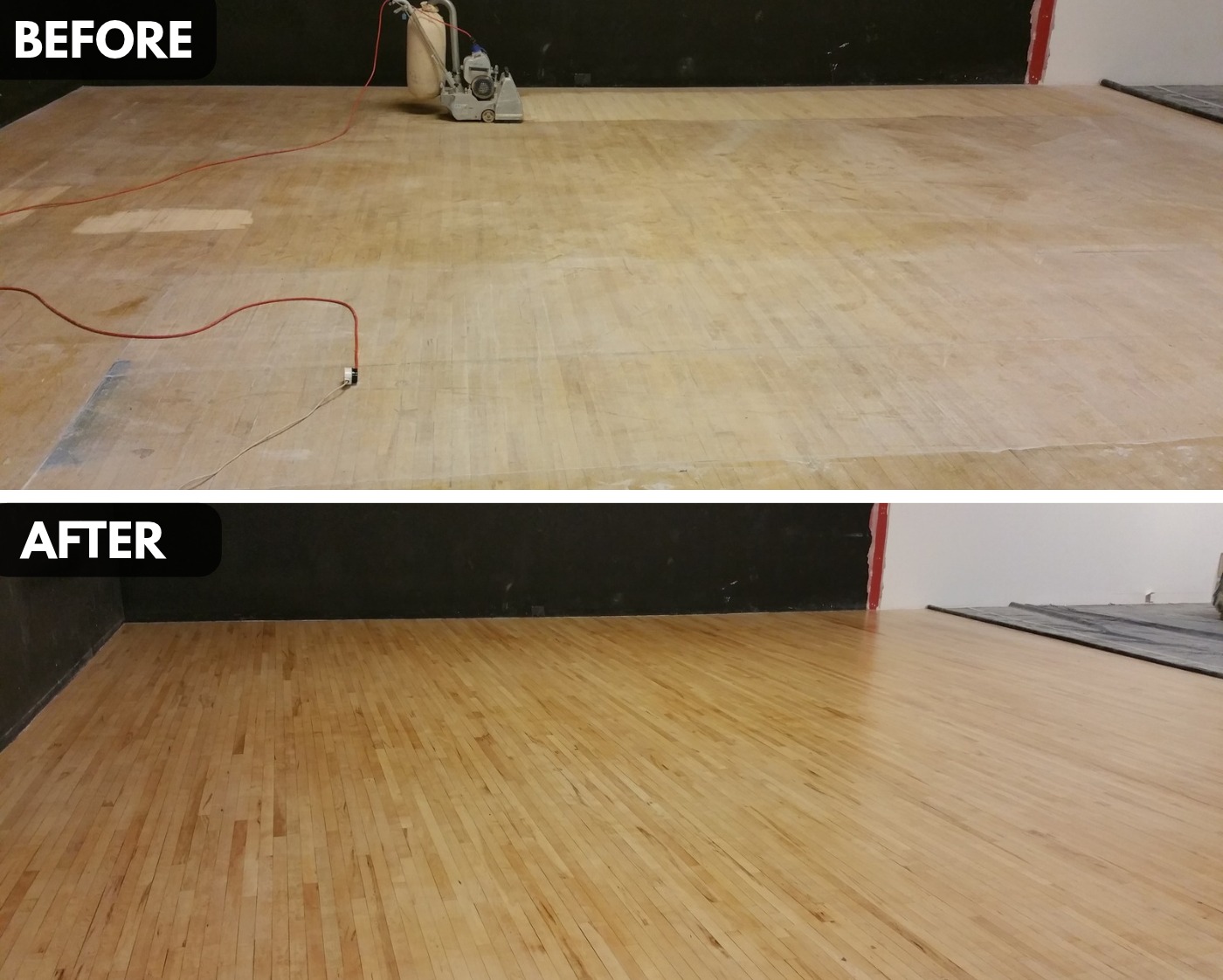
We also encourage facilities managers to look at previous restoration examples before selecting a finish. Visit our floor sanding gallery to see examples of timber floor treatments and the appearance different restoration approaches can achieve.
For jobs involving several rooms or substantial floor areas, a measured schedule and clearly defined scope are particularly useful. That helps avoid disputes about repairs, coating quantities, moving fixtures and when each area can be returned to service.
Commercial Floor Sanding in Catford: Common Questions
Can commercial floors be sanded overnight without closing the business?
Some work can be completed overnight, subject to access, noise restrictions and the condition of the timber. Coating drying and curing still require protected time. We would agree a realistic reopening schedule rather than assume every finish can withstand full commercial use the following morning.
Is commercial floor sanding completely dust-free?
No professional contractor should promise zero airborne dust. Proper extraction, suitable filtration, masking and segregation can greatly reduce dust migration, but controls must match the work and neighbouring occupancy. Sensitive premises may need additional isolation and cleaning arrangements.
How long will a commercial floor lacquer last?
Service life varies with footfall, grit control, cleaning chemicals, furniture movement and the coating specification. An office meeting room may retain its finish far longer than a busy café entrance. Regular maintenance and timely recoating help prevent complete failure of the protective film.
Can old parquet floors in Catford schools and offices be repaired?
Many traditional parquet floors can be restored if the blocks and supporting substrate remain sound. Loose blocks may be re-bonded, damaged pieces replaced and the surface refinished. Extensive moisture damage or widespread adhesive failure can require more substantial remedial work.
Do you work in active commercial premises?
Commercial work can be planned around trading, teaching, hospitality and office operations where safe segregation and suitable access are achievable. The working arrangement depends on the area involved, the available exits and the chosen coating’s drying requirements. We discuss those matters before finalising the programme.